
Welcome to Our Blogs
INCREASE YOUR AWARENESS
Follow along as we share valuable knowledge and content to enrich and empower your everyday life.
Understanding, Recognizing, and Reporting Child Abuse to Protect Every Child
Understanding Child Abuse
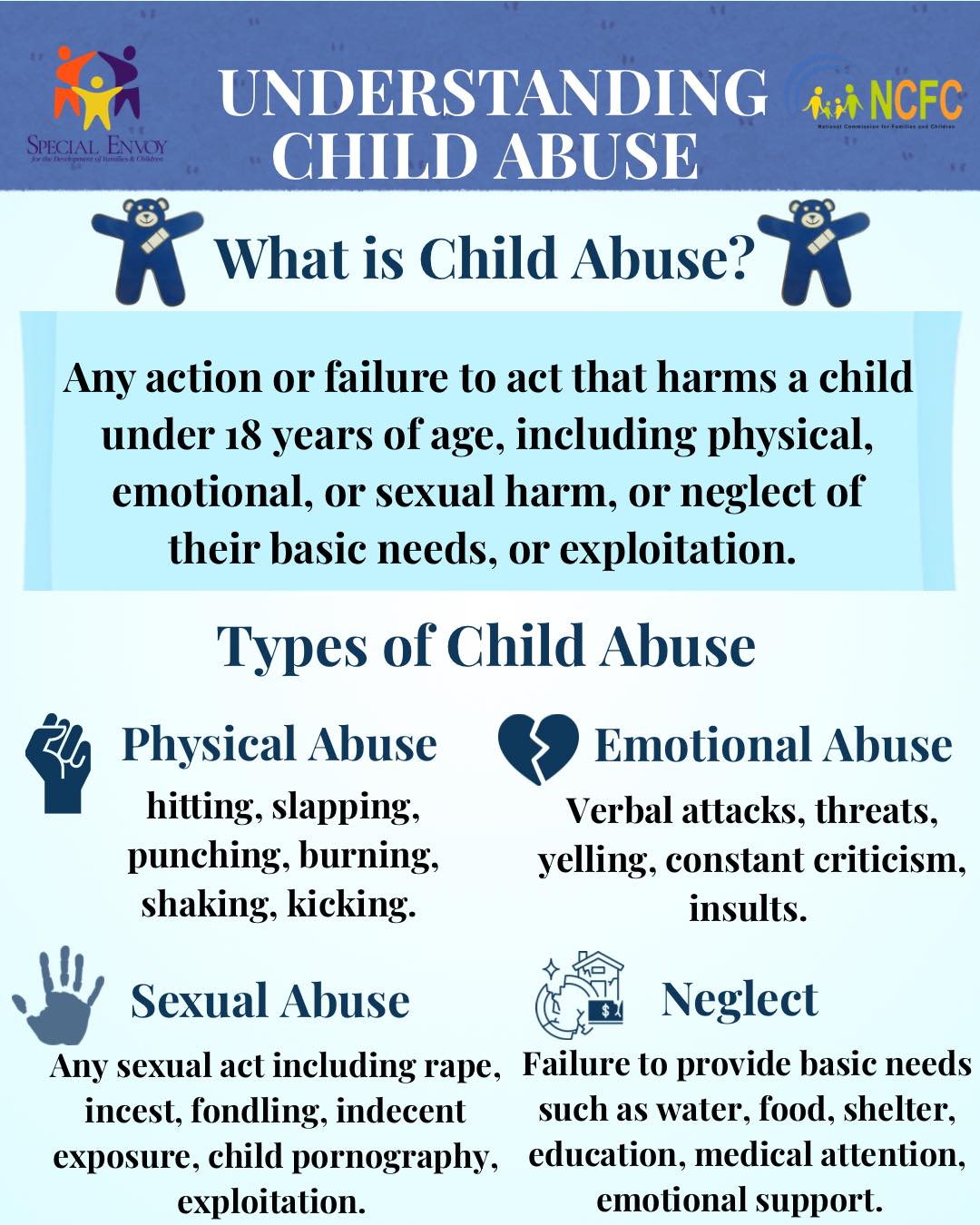
April is Child Abuse Awareness Month, a time to raise awareness and strengthen our commitment to protecting our children.
We’re starting with the basics — what is child abuse and the different forms it can take.
What is Child Abuse?
- Child Abuse is any action or failure to act that harms a child under 18 years of age, including physical, emotional, sexual harm, neglect of their basic needs, or exploitation (WHO, 2026).
Types of Child Abuse:
Physical Abuse - Intentional physical harm such as hitting, slapping, punching, shaking, burning, or injuring a child.
Emotional Abuse - Constant criticism, humiliation, threats, rejection, or withholding love that damages a child’s self-esteem.
Sexual Abuse - Any sexual activity with a child, including rape, incest, fondling, exploitation, touching or exposing a child to sexual content.
Neglect - Failure to provide basic needs such as food, shelter, supervision, medical care, education, or emotional support.
Knowing and understanding these forms of child abuse is the first step in protecting children. When we are informed, we are better able to recognize harm, support those in need, and speak up. Every child deserves to grow up safe, loved, and protected.
Because every child has rights.
Under the United Nations Convention on the Rights of the Child:
• Article (1) – Everyone under 18 has these rights.
• Article (19) – You have the right to be protected from being hurt and mistreated, in body or mind.
• Article (34) – The right to be free from sexual abuse.
• Article (36) – The right to protection from any form of exploitation (being taken advantage of).
These are just some of the rights every child is entitled to and there is much more to learn and uphold.
Together, let’s continue to raise awareness and stand up for every child’s right to feel safe and valued!

Signs a Child May Be Experiencing Abuse
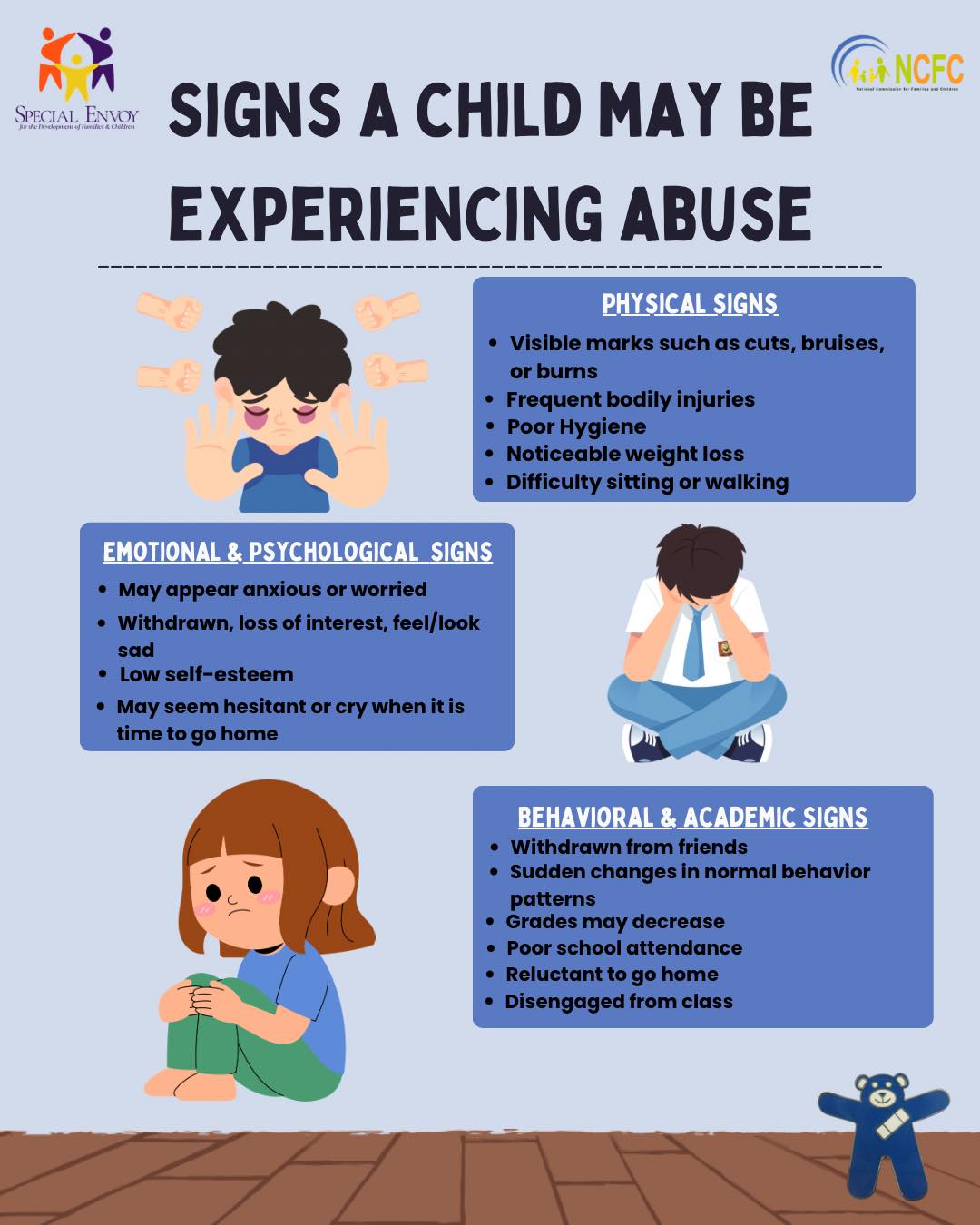
An important reminder that recognizing the signs of child abuse can help us protect those who need it most.
Physical Signs may include:
Unexplained cuts, bruises, or burns
Frequent injuries
Poor hygiene or noticeable weight loss
Difficulty sitting or walking
These signs may indicate that a child is being physically harmed or neglected.
Emotional & Psychological signs may include:
Anxiety, fear, or constant worry
Withdrawal from friends or activities
Low self-esteem
Hesitation or distress when it’s time to go home
These behaviors may reflect emotional distress or trauma.
Behavioral & Academic signs may include:
Sudden changes in normal behavior pattern
Decline in academic grades and performance
Poor attendance
Disengagement in class
Reluctance to go home
These changes may signal that something deeper is affecting the child’s well-being.
Under the United Nations Convention on the Rights of the Child:
* Article (27) You have the right to food, clothing, a safe place to live and to have your basic needs met. You should not be disadvantaged so that you can’t do many of the things other kids can do.
* Article (37) No one is allowed to punish you in a cruel or harmful way.
* Article (39) You have the right to help if you’ve been hurt, neglected, or badly treated.
These are just some of the rights every child is entitled to and there is much more to learn and uphold.
Together, let's continue to raise awareness because every child deserves to feel safe, supported, and protected.
Reporting Child Abuse & Violence
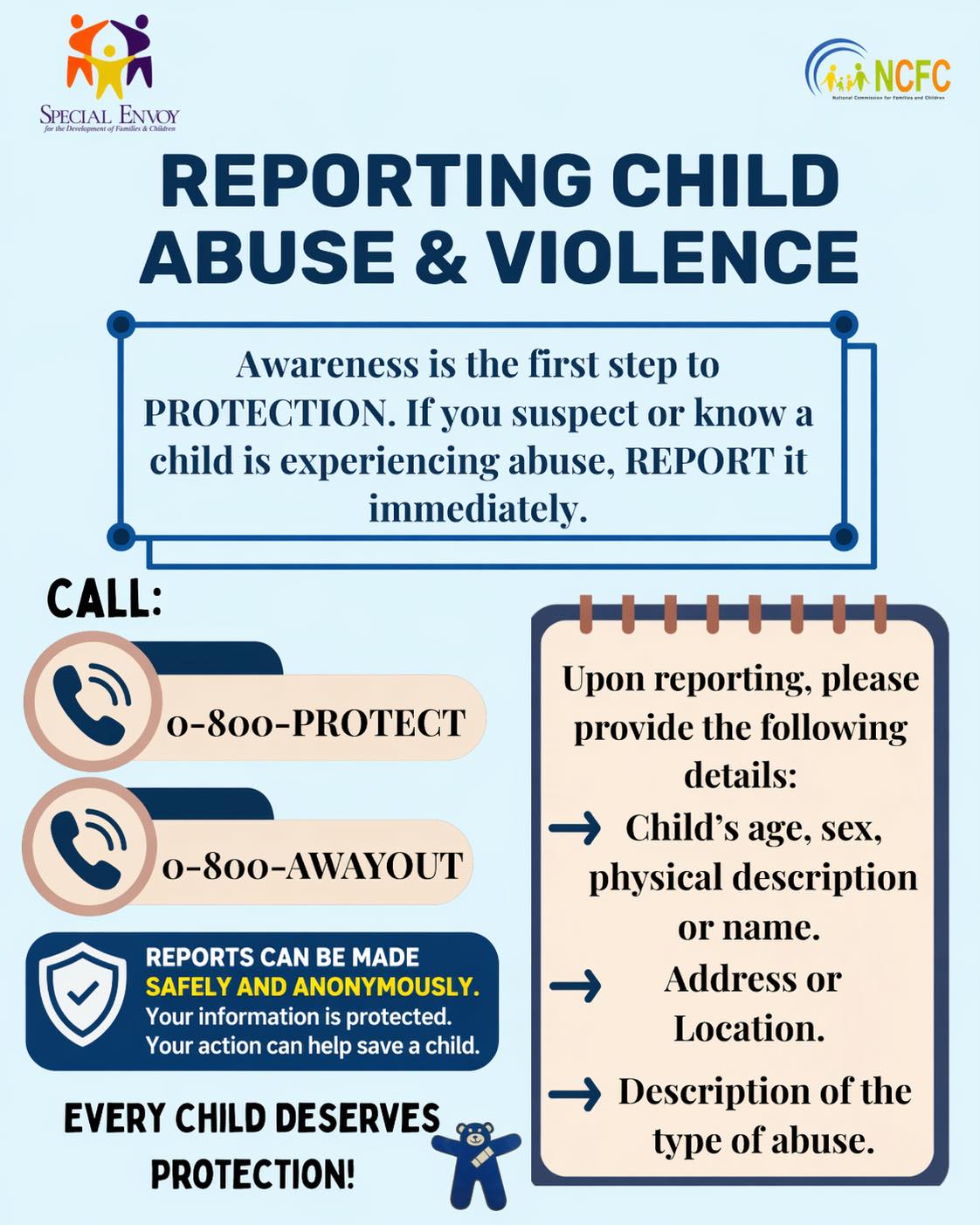
We shine a light on the importance of reporting child abuse and violence. Awareness is the first step to protection, and every action taken can help safeguard a child’s life.
If you suspect or know that a child is experiencing abuse, it is critical to report it immediately. Reports can be made safely and anonymously, ensuring that your voice can make a difference while protecting your identity. Key details provided such as the child’s description, location, and the nature of the concern helps ensure a timely and effective response.
Protecting children is a shared responsibility and each of us has a role to play in creating safer environments where children can grow, thrive, and feel safe.
How can you help raise awareness?
1. Familiarize yourself with the referral pathway to reporting abuse and violence.
2. Contribute to creating safe and supportive environments.
3. Educate others in your community on recognizing signs of abuse and how to report concerns.
4. Get involved in and support initiatives like the Blue Teddy Bear Campaign.
Together, let's continue to raise awareness because every child deserves to feel safe, supported, and protected.
Sources:
World Health Organization. Child Maltreatment. 2026, www.who.int/news-room/fact-sheets/detail/child-maltreatment.
United Nations. Convention on the Rights of the Child. 1989, www.unicef.org/child-rights-convention.
UNICEF. What Is Child Protection? www.unicef.org/protection.

@ Copyright 2026 - Special Envoy for the Development of Families & Children| All rights reserved